How Restaurants Cut Coconut Supply Cost
Five coconut cost leak points in restaurants, how to standardise serve sizes, and how to restructure supply without reducing the quality customers see.

Table of Contents
Introduction
Restaurants rarely lose money on coconut because of unit price. They lose it on wastage, inconsistent serve sizes, and unscheduled purchasing.
This article lists the most common leak points and how to close them without reducing the quality customers actually see.
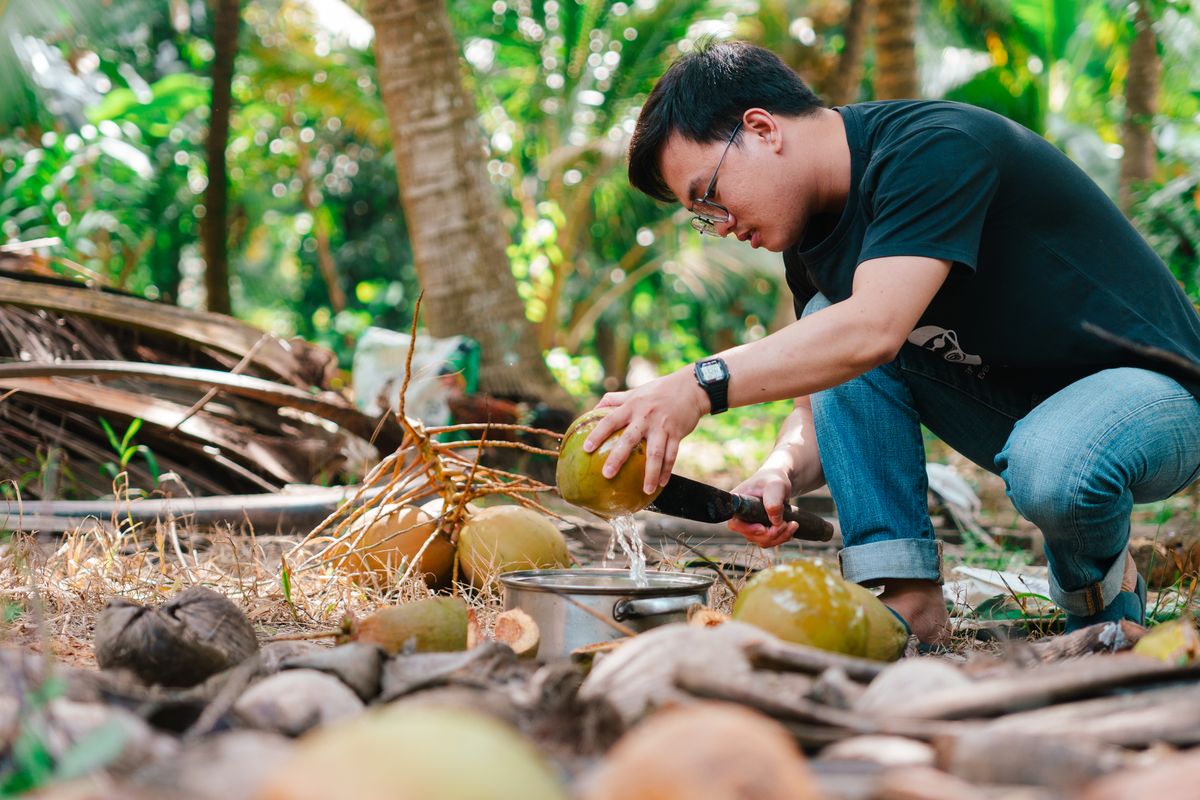
Five Cost Leak Points
1. Unscheduled Purchasing
Buying to daily need means paying that day's price, every day. On staff time alone it is one of the highest costs that is least often recorded.
2. Serve Sizes That Drift
Without a written standard, every staff member pours to their own habit. A small difference per serve becomes a large number per month.
3. Unrecorded Wastage
If you do not count what gets discarded, you cannot manage it. This is the largest leak in most kitchens.
4. The Wrong Product Line
Using whole nuts for items that do not need the shell means paying for labour and disposal with no benefit to the customer.
5. Incorrect Storage
Stock held at the wrong temperature spoils early. The cost shows up as wastage, but the cause is handling. See our coconut water storage guide.
A quick test 🔍
Weigh your coconut waste for seven consecutive days. Most restaurants doing this for the first time are surprised by the number — and that number is your savings budget.
Standardise Recipes and Serve Sizes
Write a Specification for Every Item
Exact volume per serve
State it in millilitres, not "a glass". Different glasses hold different volumes.
Mandatory measuring tools
A marked jug or fixed-size ladle removes staff-to-staff variation within a single shift.
Train Once, Audit Weekly
Training without auditing decays within two weeks. A brief weekly check keeps the standard without constant supervision.
Tie the Standard to the Menu
If serve size drifts, your menu price no longer reflects cost. The two have to move together.
Want a check on whether your supply structure is efficient? Share your weekly volume and coconut menu.
💬 Get Bulk QuoteRestructure Your Supply
Move to a Standing Schedule
A standing schedule gives more stable pricing, consistent grade, and removes the market-run cost. The full comparison is in our wholesale versus retail article.
Match the Line to the Menu Item
Use coconut water per litre for poured items, and whole young coconuts only where the shell is part of the serve.
Run Two Grades
Presentation grade for photographed serves; standard grade for cooking and blended drinks. Customers see no difference on the second group.
Align Frequency With Space
Restaurants in Subang Jaya, Cheras and Kajang can usually get two deliveries a week, which cuts storage requirement and wastage at the same time.
Stay With One Primary Supplier
Why switching repeatedly costs you
Every supplier change means a new grade, a new size profile, and a relearning period for your kitchen. That adjustment cost is rarely counted, but it is real.
When switching is justified
Switch when a problem repeats after you have raised it with data — not because another quote is a few sen lower. Negotiate with your wastage record in hand first.
Rearrange the Kitchen Workflow
Most coconut wastage happens at peak, when staff are rushing. Put stock, opener and service vessels in a single work zone so nobody has to leave their station.
This simple layout change often does more for wastage than any pricing conversation with a supplier.
Measure Before and After
Four Numbers Worth Tracking
Cost per serve, wastage rate, serves per supply unit, and stock-out frequency. Those four explain nearly every coconut margin problem.
Take a Two-Week Baseline
Change nothing for the first two weeks. You need an honest baseline to measure any change against.
Change One Thing at a Time
If you switch supplier, recipe and schedule simultaneously, you will never know which one worked.
Review Quarterly
Menus change, volumes change, and the optimal supply structure changes with them.
Frequently Asked Questions
Will switching supplier save the most?
Usually not. Wastage and serve size almost always yield more than a unit-price difference. See our wholesale coconut cost structure guide.
What if my volume is too small for a standing schedule?
Combine both product lines into one delivery to reach a sensible schedule.
Should I reduce serve size to save money?
Only if your current size is genuinely excessive. Cutting visible customer value is the most expensive saving in the long run.
How long before changes show results?
Serve standards show up within a week. Supply structure changes take roughly a month to settle.
Who should own the wastage record?
A shift lead, not a manager. A record filled in by whoever is on the line at peak is far more accurate than one reconstructed at the end of the day.

Conclusion
Restaurant coconut cost is controlled through four things: a fixed supply schedule, the right product line per menu item, standardised serve sizes, and recorded wastage.
Measure first, change one thing at a time, then review. Contact KelapaKaw! to discuss a supply structure matched to your menu and volume.