Young Coconut Grade and Size Guide
What genuinely forms a young coconut grade, the specification to request in writing, the three delivered forms, and a five-minute check on arrival.

Table of Contents
Introduction
"Grade A" means different things to different suppliers. Without a written specification, you are comparing quotes that are not equivalent.
This guide explains what genuinely forms a young coconut grade, what to ask for, and how to inspect a delivery in a few minutes.
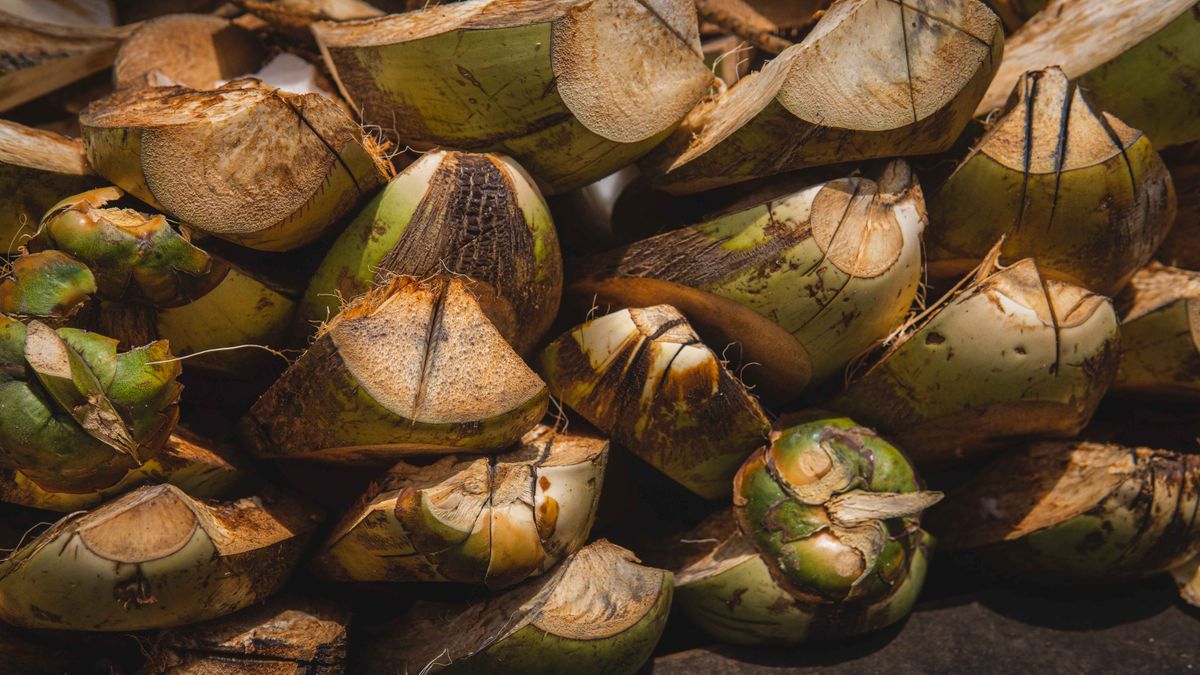
What Actually Determines Grade
Water Volume
This is the single most important criterion for beverage buyers. Volume decides how many glasses you get from each nut, and therefore your true cost per serve.
Shell Integrity
Hairline cracks are not always visible at a glance, but they let air in and accelerate spoilage. Cracked pieces should be screened out before loading, not in your kitchen.
Maturity
Too young means low water and thin flavour. Too mature means thickening flesh and reduced water. The correct window is narrow, and that is where the real skill in selection lies.
Consistency Within a Batch
A good batch is not just good on average — it is uniform. Wide variation within a single delivery makes consistent serve sizes difficult.
Consistency Across the Year
A good grade on one delivery does not mean much. What matters is whether the supplier can hold that same grade when farm supply tightens.
The simplest way to judge it: record average size and rejection rate for two months, including at least one peak demand week. Performance in that difficult week is the real answer.
Ask for these in writing 📋
Water volume range per piece, size range, delivered form, and the replacement policy for damaged pieces. Those four turn 'Grade A' from a marketing label into a specification you can verify.
Size and How It Maps to Serve Size
Why Average Size Is Not Enough
Two batches can share an average size but have very different distributions. What matters to your kitchen is the range, not the average.
Match Size to Menu Format
Served in the nut
Larger sizes give better presentation and a more comfortable margin at a higher menu price.
Poured into a glass
Consistent mid-size pieces are usually more efficient because you reduce the leftover discarded after pouring.
Effect on Cost Per Glass
Small nuts at a low price can produce a higher cost per glass than large nuts at a higher price. Calculate in glasses, not in pieces. We set out the method in our wholesale coconut cost structure guide.
Need a written grade specification before ordering? Tell us your menu format and we will prepare one.
💬 Get Bulk QuoteThree Delivered Forms
Full Husk
Cheapest per unit and most robust in transit, but heaviest and requires husking work at your premises.
Part-Husked
The usual compromise. Lighter than full husk, still reasonably protected, and reduces kitchen work.
Diamond Cut
Ready to open quickly at the counter. Most expensive per unit because of the labour content, but most efficient for outlets with high serve rates.
Choose on Labour, Not Price
The right form is the one that lowers your total operating cost. Outlets with limited staff are almost always better off with a more prepared form.
How to Check on Arrival
The Five-Minute Check
Take a random sample
Pull pieces from the top, middle and bottom of the load — not only the ones on top.
Shake and listen
A clear slosh indicates good volume. A faint sound points to a low-water piece.
Inspect for cracks and mould
Look at the base and the cut surfaces. That is where problems appear first.
Record and Share
Log how many pieces you reject each delivery. That data is the basis for a productive conversation with your supplier — far more effective than a general complaint.
Do Not Wait Until the Lorry Leaves
Inspection happens during the delivery, not that evening. Buyers in Kuching, Sibu and Miri served on a consolidated schedule need to be stricter here, because replacement runs take longer.
Frequently Asked Questions
Does Grade A mean the same thing everywhere?
No. It is a trade term with no single standard. A written specification is the only reliable reference.
Can I request mixed grades to save cost?
Yes, and it makes sense if part of your volume goes into blended drinks where presentation does not matter.
What happens if I receive damaged pieces?
Record and report the same day. A clear replacement policy should be agreed before the first order.
Does grade affect shelf life?
Yes, directly. Intact shells and correct maturity give a longer quality window. See also our young versus mature coconut comparison.
How many pieces should I inspect per delivery?
A small sample drawn at random from three parts of the load is enough to catch a systematic problem. What matters is inspecting consistently, not inspecting a large number.

Conclusion
Young coconut grade is set by water volume, shell integrity, maturity and batch consistency. Ask for a written specification, choose a delivered form based on your labour cost, and check every delivery systematically.
See our wholesale young coconuts, or WhatsApp KelapaKaw! with your menu format for a grade and form recommendation.