Fresh vs Pasteurised Coconut Water
An operational comparison of fresh and heat-processed coconut water — turnover speed, cold chain capability, delivery distance and menu promise.

Table of Contents
Introduction
For a cafe operator, the choice between fresh coconut water and heat-processed coconut water is not about which is better. It is about which matches your sales speed, chiller space and menu promise.
This article compares the two operationally rather than in marketing terms.

What Actually Differs
Fresh Coconut Water
Extracted from young coconuts and chilled without heat treatment. The taste sits closest to drinking straight from the nut, with slight batch-to-batch variation because fruit is not a factory product.
Its usable window is short and depends entirely on the cold chain.
Heat-Processed Coconut Water
Heat treated to extend shelf life. Taste is more uniform between batches and far less sensitive to temperature disruption in transit.
In exchange, the flavour profile shifts slightly from fresh — a difference regular drink-from-the-nut customers do notice.
The Difference That Matters Most to You
It is not taste. It is tolerance for operational error. The fresh product punishes weak handling quickly; the processed product is more forgiving.
The right question 💡
Not 'which is better', but 'how fast does my stock move, and how reliable is my cold chain'. The answers to those two questions choose the product for you.
Effect on Daily Operations
Turnover Speed
Fast turnover
An outlet clearing stock within days can run the fresh product with little risk and gain the taste advantage.
Slow turnover
An outlet selling a few units a day is far more exposed to waste on the fresh product.
Cold Chain Capability
If your chiller is shared, opened constantly, or unstable in temperature, the fresh product will expose that first. Read our fresh coconut water storage guide for the fundamentals.
Delivery Distance
Operators in George Town and Bayan Lepas sit on a stable route. Operators in Kota Kinabalu are served on a consolidated schedule, so delivery frequency becomes a bigger factor in the product choice.
Your Menu Promise
If your menu says "fresh coconut water", the product you serve has to support the claim. This is not just marketing — it is customer trust.
Unsure which suits your sales rate? Share your daily volume and we will recommend an option.
💬 Get Bulk QuoteChoosing for Your Business Model
Specialty Cafes and Juice Bars
Taste is the product. Fresh is almost always the right call, provided cold chain and turnover are disciplined.
Restaurants With Broad Menus
Coconut water may be one of twelve drinks. Low daily volume makes shelf life more important than flavour nuance.
Catering and Events
Demand arrives in large, uneven spikes. Longer shelf life gives you far more comfortable planning room.
Factories and Food Processing
Requirements are set by your production process, not by an end customer. See our factory supply guide.
Night Market Stalls and Mobile Traders
The main constraint is a mobile cold chain
Mobile traders have no fixed chiller. Stock depends on ice bins and travel time, so tolerance for error is far lower than in a fixed outlet.
What usually works
Small quantities, fast turnover within a single night, and delivery on the trading day. Under those conditions the fresh product performs well even without a permanent chiller.
The Hybrid Model Many Operators Use
Fresh for the Counter, Stable as Backup
Many operators run the fresh product as their headline offer and keep longer-life stock as backup for spike days or delivery disruption.
Fresh for Weekends Only
For outlets with a clear weekend peak, ordering fresh for Friday to Sunday gives the taste advantage on the days that matter without week-long risk.
Whole Nuts for Presentation
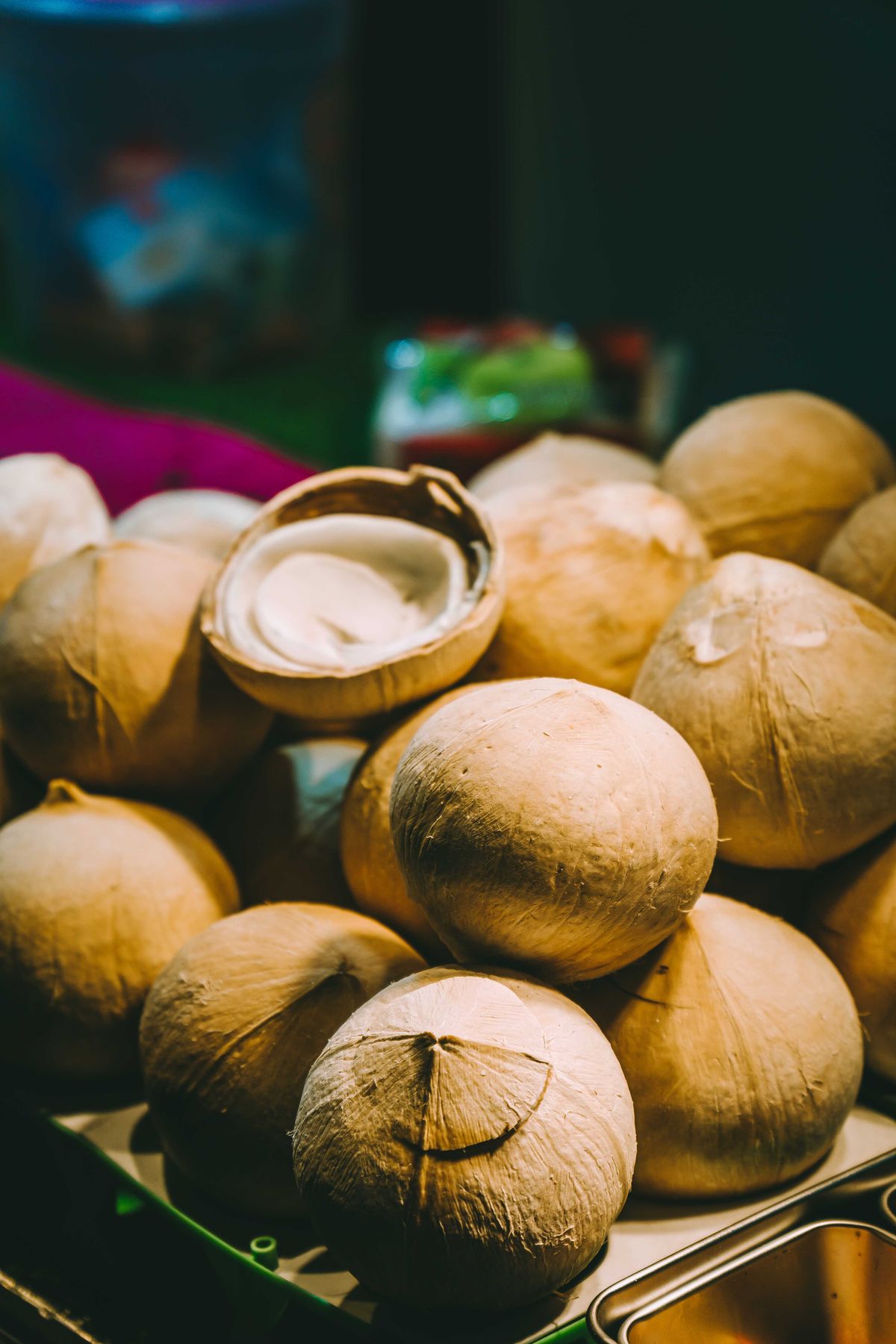
Some outlets keep whole young coconuts for photographed serves and use coconut water per litre for blended drinks. Two lines, two purposes.
Frequently Asked Questions
Can customers tell the difference?
Customers who regularly drink from the nut usually can. Customers ordering blended drinks rarely do.
Is the fresh product always more expensive?
Cost per litre and cost per glass are two different numbers. A fresh product with high waste can be more expensive per glass. See our per-litre pricing explainer.
Can I switch between the two seasonally?
Yes, and it is a common strategy for operators with seasonal peaks.
What should I ask my supplier?
Ask for written confirmation of whether the product is fresh or heat processed, whether anything is added, and the target temperature on delivery.
Can I trial both before deciding?
Yes, and it is the most useful approach. Run each product for a full two weeks while recording waste and customer feedback. Two weeks of data answers the question better than any one-off taste test.
Conclusion
Fresh coconut water gives the best taste but demands discipline. Heat-processed gives stability at the cost of some nuance. The right choice is set by your sales speed, chiller capability and menu promise.
KelapaKaw! supplies coconut water per litre and young coconuts per piece across Malaysia. WhatsApp us your daily sales rate for a specific recommendation.